
What can we learn from how three countries decide on health innovations within tight budgets?
What Thailand, the Netherlands, and Ghana show about embedding prioritization tools into health innovation introduction decisions


Universal health coverage (UHC) is a promise. Deciding what—and who—gets covered under benefits packages is where political platforms, budgets, and evidence converge. Every government that commits to UHC hits the same wall: needs and options grow faster than budgets. Thailand, the Netherlands, and Ghana each built systems to make decisions on UHC. Their stories differ, but three lessons emerge:
The promise of UHC is the easy part; prioritization is the essential next step. Committing to UHC makes headlines and might win an election. The hard but unavoidable next step: deciding what health innovations to fund when the budget runs out before the need does.
Prioritization tools only work when they inform decisions that matter. Health technology assessment (HTA) and other economic tools, essential medicines lists, benefits-package design, and strategic purchasing do not change outcomes simply by existing. They matter when they are embedded into the recurring decisions that determine coverage, pricing, purchasing, financing, and delivery.
Building prioritization machinery is not the same as making that machinery work. A system can have the right form on paper but still lack the function and routine use needed to shape real coverage decisions. And even sound decisions fall short if leaders do not use them, or if the workforce, supply chain, financing flows, and delivery systems cannot carry out those decisions.
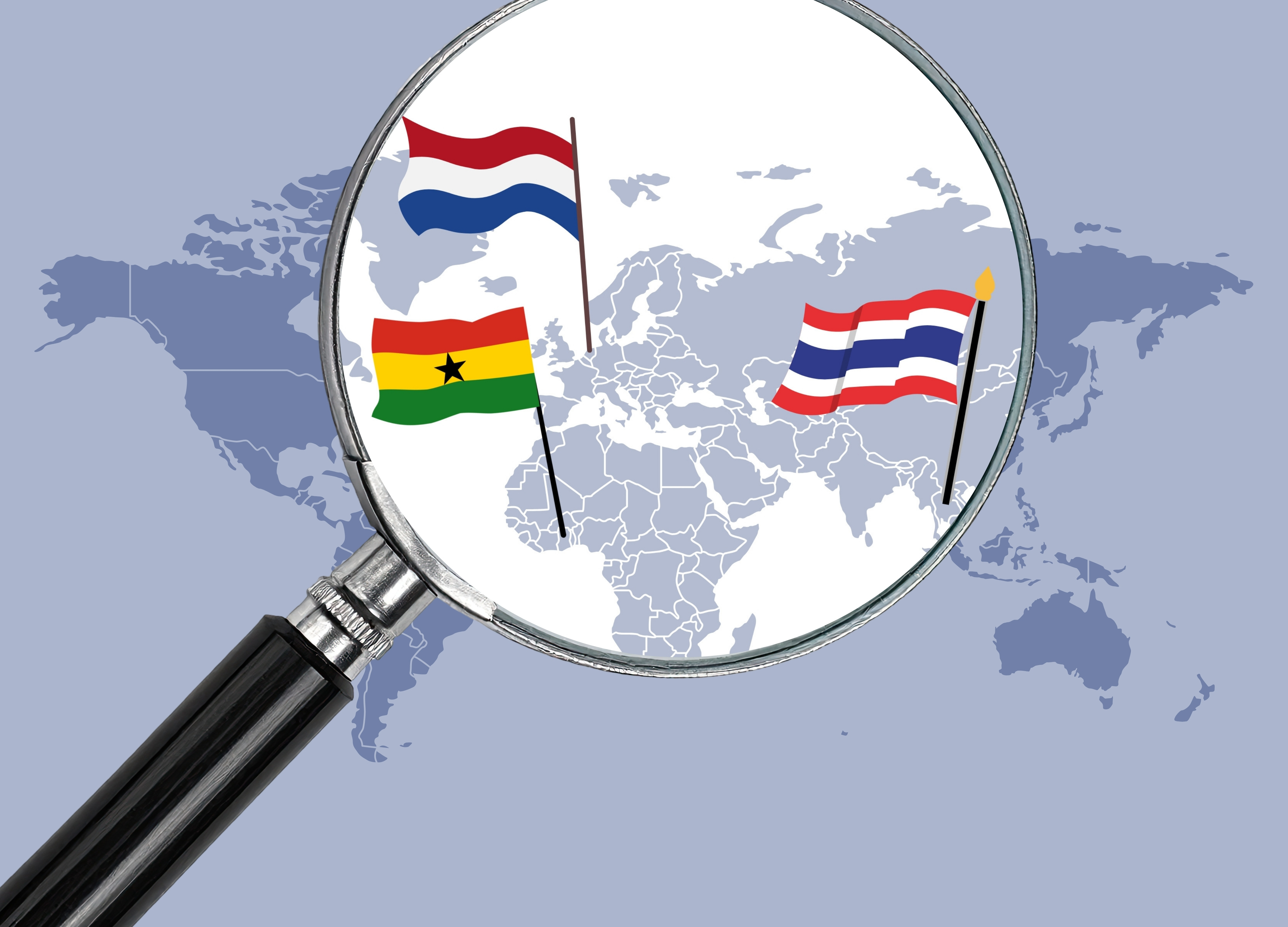
HTA and UHC benefits-package design are visible prioritization tools, but they’re only one part of decision-making: leaders also pool money, regulate, purchase strategically, negotiate prices, and plan for delivery, frontline adoption, and access. Drawing on the ALIGN Consortium’s decision-making deep-dive case studies, we show how:
Thailand embedded HTA in the formal coverage and medicines-list processes, then linked evidence to price negotiation and purchasing.
The Netherlands linked national assessment to coverage authority and risk-bearing purchasers who shape how innovations enter care pathways.
Ghana built much of its HTA architecture and is now aiming to embed it more deeply into benefit-package review, reimbursement, price negotiation, procurement, and delivery.
Thailand: a bold UHC commitment that led to one of the world’s most widely referenced prioritization systems
When Thailand launched its Universal Coverage Scheme in 2002, it brought the country close to universal coverage almost overnight, reaching people previously left outside the main public schemes. This development was also largely a domestic public-financing story: government health spending rose as a share of total health spending, while out-of-pocket spending fell sharply.
What followed was harder: a flood of demands from patients, providers, and civil-society groups, each pressing for specific services. The government needed a credible way to say yes―and to say no.
Its answer was the Health Intervention and Technology Assessment Program (HITAP), formally established in 2007. But the road was not smooth: earlier attempts to build national HTA capacity had failed, once in 1993 for lack of resources, and later in 2002 when it was overwhelmed by demand. Institutions need people, data, methods, funding, and a real decision problem to solve.
Most importantly, Thailand connected evidence to decisions. HTA became part of the formal pathway for deciding what enters the Universal Coverage Scheme benefits package and the National List of Essential Medicines. Cost-effectiveness and budget impact are not automatic yes-or-no rules, and HITAP does not make final reimbursement decisions, but its evidence shapes deliberation, price negotiation, and purchasing through the official decision-making pathways. Through central price negotiation informed by the HTA findings for selected medicines and supplies, the National Health Security Office reported savings of up to $188 million over several years, a concrete example of strategic purchasing power.
Thailand’s lesson is not that every country should copy HITAP. It is that transparent, stakeholder-inclusive processes matter most when they are embedded into real decisions. Evidence gained power because it could shape coverage, negotiation, and purchasing, not because it sat in a report or dashboard.
Read the full Thailand case study.
The Netherlands: when tools are embedded into the financing architecture
The Netherlands offers a different route. Its prioritization system was not born of a single coverage crisis; HTA, managed competition, and selective contracting were consolidated within a broader health-financing reform.
The 2006 Health Insurance Act unified a fragmented mix of sickness funds, private insurers, and providers into a single mandatory framework. It did not create universal coverage or invent HTA overnight but brought existing tools into a more coherent architecture: national technology assessment, a legally defined basic benefits package, and insurers with purchasing authority.
Today, Zorginstituut Nederland (ZN) assesses whether an innovation belongs in the basic package against four criteria: necessity, effectiveness, cost-effectiveness, and feasibility. Its assessment carries real coverage weight. But the system does not stop there. Once a technology is eligible, private insurers determine how it enters practice: contracting with specific providers, under particular conditions, at negotiated prices and pace. Because they bear financial risk, insurers have incentives to take the evidence seriously. This can slow diffusion, but embedded innovations better fit the financing and delivery system around them.
The Dutch approach stands out for evaluating how a technology fits within an entire care pathway―prevention, diagnosis, treatment, follow-up, and complication management―rather than assessing that technology in isolation. When ZN assessed flash glucose monitoring for diabetes, the question was not simply whether the device works, but where it fits relative to finger-prick and real-time continuous glucose monitoring already in the package, and for which patients it adds value. “Value” here means much more than clinical benefit; it extends to whether the cost is acceptable for what it delivers, and whether inclusion works in practice.
In the Netherlands, innovation succeeds by fit, not speed. The machinery works because assessment, coverage, purchasing, and delivery are linked.
Read the full Netherlands case study.
Ghana: embedding new tools into a live insurance system
Ghana’s story is still unfolding. In 2003, it launched a National Health Insurance Scheme (NHIS) with an ambitious promise: a benefits package estimated to cover more than 95% of diagnosed conditions. It quickly became more than a financing mechanism; it became a political institution and a fixture of national election campaigns.
The package grew not from explicit budget analysis but from public pushback against continued high out-of-pocket payments, particularly among the poorest. As enrollment and costs mounted, the gap between promise and fiscal reality opened a window for HTA.
Ghana did not build from scratch. It already had an Essential Medicines List, Standard Treatment Guidelines, a National Medicines Selection Committee, and the insurance scheme itself; HTA was added incrementally over more than a decade. A pivotal 2016 HTA on hypertension treatment showed how economic evaluation could inform clinical guidelines and open room for price negotiation.
By 2019, the Minister of Health had inaugurated an HTA Technical Working Group and Steering Committee; formal process guidelines followed in 2022. Ghana now has an HTA Secretariat, an eight-step assessment process, and a published appeals mechanism. HTA analysis has already helped determine how to make good on the political promise to add childhood cancer care to NHIS coverage.
But Ghana’s experience carries a clear warning: building the machinery is not the same as using it. The hypertension HTA identified real savings and better treatment, yet delivery constraints meant better prioritization still had to be matched by implementation capacity. And while the governance framework exists, how far HTA is routinized and binding within NHIS decisions remains a work in progress.
Ghana shows the reform challenge in real time: structures must connect to the decisions that matter, and those decisions must also connect to the delivery capacity that makes them real.
Read the full Ghana case study.
UHC commitments require health product prioritization
That pressure is only rising. Fiscal space is tightening, external aid is shrinking, and health product pipelines keep growing. The UHC promise remains essential, but it alone cannot decide what happens when needs and options exceed budgets.
This leaves one question for every government that has signed onto UHC: where, exactly, are your prioritization tools embedded into the decisions that determine financing and delivery?
 | A guest post by
|
Great, practical insights on prioritization - vital in today’s even-more-constrained resource environment in many LMICs. Thanks for sharing.